
Separate site security from legal status before sharing details
 Available in AU
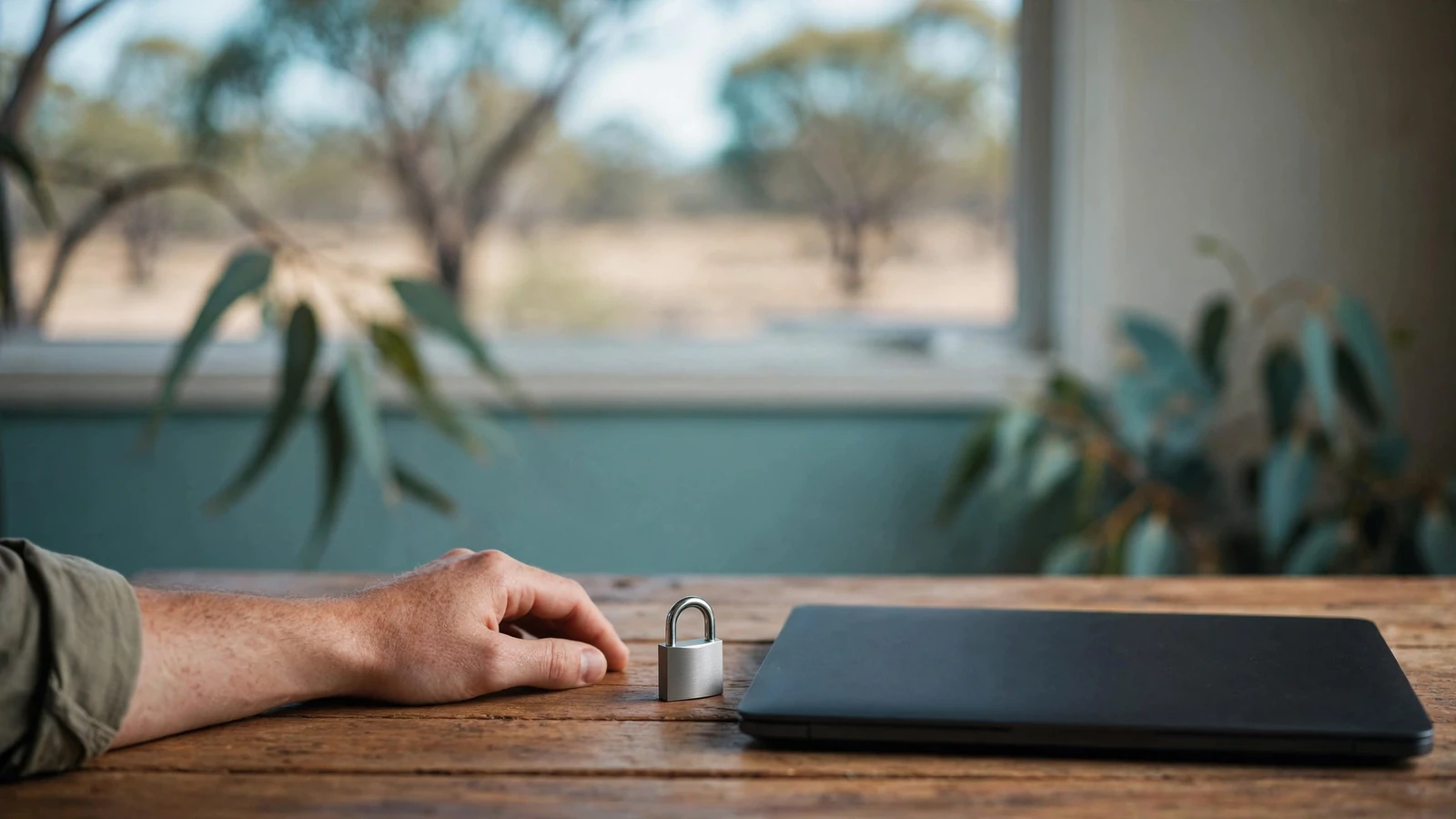
A site’s security claims do not establish that it may offer online casino games to people in Australia.
What “Secure” Can—and Can’t—Mean for Australian Players
When Australians look for a safe way to play casino games online, it helps to separate two questions: whether a website protects information, and whether it is allowed to offer those games here. They are not the same thing. A site may describe itself as secure, but that label does not make its service legal in Australia.
The Interactive Gambling Act 2001 prohibits operators from offering online casino games to people in Australia. That includes online slots and games such as blackjack. The rule is about providing the service to customers here; an offshore address or a foreign licence does not, by itself, change the Australian position. Put simply, a secure real-money casino is not necessarily one that can legally serve Australian players.
There is an important distinction for individuals, too. The Act does not explicitly criminalise a person for using an offshore casino site. That should not be mistaken for approval, a guarantee of access, or a promise that you will have help if something goes wrong. The legal restriction is directed at operators offering prohibited services, while the practical risks of using an unlicensed service can still fall heavily on the customer.
When choosing an online casino, you should check what licensing information is available and treat it as one part of assessing security, not a guarantee. The details below give you a concise reference for what is known about each operator.
1. Golden Pokies
License: Curacao
The available licensing information for Golden Pokies names Curaçao. You can use this as a starting point for your own checks, but no further security details are provided here.
2. Bizzo Casino
License: Curacao Gaming Control Board (TechSolutions Group N.V.)
Bizzo Casino is listed with a Curaçao Gaming Control Board licence associated with TechSolutions Group N.V. This gives you a named licensing authority and company to consider when checking the operator.
3. JeetCity Casino
License: Curacao eGaming (Dama N.V.)
JeetCity Casino is listed with a Curaçao eGaming licence associated with Dama N.V. You can use those details as a reference when assessing the operator.
4. Thor Casino
License: Curacao – Antillephone N.V. (Versus Odds B.V.) · Min. deposit: EUR 20
Thor Casino is listed with a Curaçao licence from Antillephone N.V., associated with Versus Odds B.V. Its stated minimum deposit is EUR 20.
5. Playfina Casino
License: Curacao eGaming (Hollycorn N.V., since 2017) · Min. deposit: A$20-30 (depends on the offer)
Playfina Casino is listed with a Curaçao eGaming licence held by Hollycorn N.V. since 2017. You should note that its stated minimum deposit is A$20–30, depending on the offer.
6. Roby Casino
License: Curacao eGaming (Roby Games Ltd)
Roby Casino is listed with a Curaçao eGaming licence associated with Roby Games Ltd. This is the licensing information available here for your assessment.
7. SpinsUp
License: Curacao Gaming Control Board OGL/2023/174/0082 (Dama N.V.)
SpinsUp is listed with a Curaçao Gaming Control Board licence, OGL/2023/174/0082, associated with Dama N.V. You can refer to the licence number and company when checking the operator.
8. JustCasino
License: Curacao Gaming Control Board
JustCasino is listed with a Curaçao Gaming Control Board licence. No further operator-specific security details are provided here.
9. House of Pokies
License: international iGaming licence – jurisdiction not named in the source · Payout speed: PayID 1-24 hours · Min. deposit: A$30 (PayID from A$10)
House of Pokies is described as holding an international iGaming licence, but the jurisdiction is not named in the available information. Its stated PayID payout speed is 1–24 hours, and the minimum deposit is A$30, or A$10 when using PayID.
10. WinSpirit Casino
License: Curacao eGaming OGL/2024/923/0383 (Antillephone N.V.) · Min. deposit: A$30
WinSpirit Casino is listed with a Curaçao eGaming licence, OGL/2024/923/0383, from Antillephone N.V. Its stated minimum deposit is A$30.
That gap is easy to miss. A website can accept an account registration or display polished terms and still lack authorisation to offer online casino games to people in Australia. If it withholds winnings or closes an account, unlicensed gambling services do not provide Australian consumer protections, and Australian laws may not assist you in recovering the money. A professional-looking page is not a local safeguard.
ACMA is the primary regulator for online gambling in Australia. Its role includes enforcing the Interactive Gambling Act and responding to services that breach it. ACMA can block websites and issue fines to operators that break the law. So access to an offshore site can change or disappear; a page loading today is not proof that the service has been cleared to operate here.
I would treat the word “secure” as a narrow claim, not a verdict. It may refer to how a site handles information or account access. Those questions matter, but they cannot answer the threshold legal question: is the operator permitted to offer the game to someone in Australia? Nor does a claim about encryption or account checks create consumer protections where the service is unlicensed.
The same goes for a secure pokies site or a real-money casino that advertises a welcome offer. A bonus, a smooth sign-up, or a reassuring badge says nothing decisive about whether the operator may legally provide casino games here. Don’t let a list of technical features do the work of a legal check. Security measures are not permission.
No Minimum Deposit Casinos in Australia: Payment Limits
Be wary of using a VPN to reach a casino site that is unavailable to you. It does not make an otherwise prohibited service authorised in Australia. It may also lead to voided winnings, account closure, and loss of your deposit, depending on the site’s terms. That is a poor trade for the illusion of certainty.
For Australians, then, “safe and secure online casino” has limits as a description. Data safeguards can reduce some risks, but they cannot turn an offshore casino into a service licensed in Australia. The legal framework matters before any technical checklist: online casino games are prohibited for operators to offer here, and ACMA is the regulator enforcing that boundary. Keep those points separate when judging what a website’s security claims actually mean. A padlock is not permission.
The Security Checks That Matter Before You Share Your Details
Before entering personal or payment information, I look at two separate things: whether the connection is protected and whether the account can be kept under my control. Neither check makes an online casino safe to use in Australia, or changes what services may legally offer here. A secure connection is a basic safeguard, not a stamp of approval.
Do
- Check for SSL encryption and the padlock icon
- Verify the full web address for correct spelling
- Use a unique password and a password manager
Don't
- Enter details if the page redirects unexpectedly
- Send identity documents via unrelated messaging apps
- Use a VPN to bypass a blocked casino site
Check the connection before typing
Casinos use SSL encryption to protect transactions and sensitive information as it moves between your browser and the site. Look for a secure connection in the browser and check that the address is spelled correctly. A padlock or secure address is useful, but it only tells you something about the connection. It does not prove that the site is honest, that your information will be handled well after it arrives, or that the service is authorised.
Take a moment to inspect the full web address, especially if you arrived through a message, advert or unfamiliar link. A lookalike address can be easy to miss on a small screen. If the page redirects unexpectedly, asks you to install something, or opens a form that does not appear to belong to the site you intended to visit, stop there. Don’t enter a password just to see what happens.
The same applies to requests for sensitive documents. A page that looks polished is not enough. Check the address again before uploading anything, and be wary of requests to send identity documents through an unrelated messaging account or email address. Once a copy of an identity document has left your device, you have less control over where it goes.
If a service is blocked, don’t try to get around that block with a VPN. Accessing a casino through a VPN may lead to winnings being voided, an account being closed, or a deposit being lost. That is a poor trade for a connection trick.
Low Deposit Online Casinos in Australia
Keep the account difficult to take over
Use a password that you do not use for email, banking or other accounts. Reusing one means a problem elsewhere can become a problem here too. A password manager can help you keep separate credentials without relying on a familiar variation that is easy to guess. Don’t share your password, and don’t save it on a device other people can use.
Where an account offers an additional sign-in check, consider enabling it. Keep control of the email address and phone number linked to the account as well: they may be used for account notices or recovery. If you receive a sign-in or password-reset message you did not request, don’t follow its link automatically. Open the service directly using the address you already know and review the account from there.
Look for signs that someone else may have accessed the account: unfamiliar profile changes, messages you did not send, or activity you cannot explain. If something feels wrong, stop using the account and contact the service through contact details reached independently, rather than replying to an unexpected message. No password habit can fix a dishonest operator, but it can reduce the chance that someone else gets in using your details.
Expect identity checks before a withdrawal
Know-your-customer checks, often shortened to KYC, are a standard part of withdrawal processing at casinos. A request to verify identity before releasing a withdrawal is not automatically suspicious, but it does mean you should understand what is being requested and how it will be submitted.
Verification commonly involves a photo ID, proof of your address and evidence that you own the payment method used. Read the instructions carefully and make sure the information matches the details on the account. If something is unclear, ask for an explanation before uploading more documents. Don’t send extra material simply because a message uses urgent language.
It is sensible to ask how documents are submitted, who can access them and whether the service explains how it handles personal information. Avoid sending documents through channels that you cannot connect to the account or service. Keep a note of what you submitted and when, without keeping unnecessary copies of sensitive documents on a shared device.
A delay while documents are checked can be frustrating. Still, the practical question is whether the process was explained clearly and whether you are being asked for relevant information through a channel you can verify. Repeated requests for unrelated details, shifting instructions or pressure to disclose passwords should make you stop.
Treat safeguards as a minimum
Encryption and identity checks protect different things: encryption helps protect information in transit, while identity checks help establish who is requesting a withdrawal. Neither guarantees that your data will be stored safely or that a withdrawal will be handled fairly. If an unlicensed service withholds winnings, Australian laws may not assist you, and consumer protections may be lacking.
So I treat “secure online casino” as a description to examine, not a promise to trust. Check the connection, protect the account, and understand any document request before sharing details. If the basics are unclear, don’t proceed. Safety first.
iPhone casinos in Australia: browser or app?
PayID Payments: Fast Transfers Still Need Checking
PayID can make a transfer feel straightforward: you enter a payment identifier, confirm the details in your banking app and send the money. But a quick payment is not proof that the recipient is trustworthy, that a gambling service is authorised to offer games in Australia, or that you will be able to recover funds if something goes wrong. Speed is one small part of payment security.
A specialist affiliate review reports that PayID transfers generally use Australia’s New Payments Platform and may clear within minutes after the payment is released. Treat that as a description of the transfer rail, not a promise about every transaction. A bank may still pause or review a payment, and a gambling site may take additional time before crediting an account. A transfer showing as complete in your banking app does not necessarily mean the other party has finished its own process.
Check the details before sending
PayID uses an identifier linked to the recipient, rather than requiring you to enter a full set of bank details. Before confirming, read the recipient information displayed by your bank and make sure it matches what you expected. If the name or other details look unfamiliar, stop and check through a channel you already trust. Do not rely on a message or pop-up supplied alongside a payment request to verify the recipient.
Be especially careful if someone asks you to send money to a different PayID from the one shown earlier, or tells you to act immediately to keep an account open. That is a reason to pause, not a reason to hurry. Never share your banking password, one-time security code or bank-app approval with another person. A payment should be authorised by you in your own banking app.
Keep the confirmation for your records, including the recipient details and transaction reference. If the payment has gone to the wrong recipient or you suspect fraud, contact your bank promptly using its official app or contact details. Do not assume that a transfer can be recalled just because it was sent recently.
Payment method is not a safety certificate
A service accepting PayID has not thereby earned a security endorsement. Nor does a payment screen establish that the business behind it is genuine. Check that you have reached the intended site, avoid links in unsolicited messages, and do not hand over extra personal or financial information simply because a PayID transfer is offered.
There is a more basic issue for Australian players: real-money online casino games cannot lawfully be offered to people in Australia. An offshore operator’s payment option does not change that. Services operating without Australian authorisation also lack local consumer protections, and Australian laws may not help you if a service withholds winnings. Using a VPN to reach a casino may lead to a closed account, voided winnings and a lost deposit. That is a poor trade for a faster transfer.
Casinos Not on BetStop in Australia: What It Means
If a payment is described as “secure”, look for what the claim actually means. Does it refer only to the banking transfer, or is it being used to suggest that the whole gambling service is safe? Those are different things. PayID may move money quickly; it cannot confirm a site’s honesty, settle a dispute with its operator or make an unlawful offer lawful.
For a payment you did not intend to make, act through your bank rather than trying to negotiate through an unfamiliar contact channel. For any request that feels rushed or changes recipient details at the last moment, leave it alone until you can verify it independently. Fast is handy. It is not a safety check.
How to Assess a Casino Website Without a “Best” List
A polished website can make a service look established, but appearance does not tell you whether it is authorised to operate in Australia. When you are weighing claims about a secure casino website, start with the regulator’s public register—not a badge, a ranking or a line of marketing copy.
ACMA’s register helps Australians check whether a wagering service holds a valid Australian licence. Look up the service there and compare the entry with the name shown on the website. A result for a similarly named business is not enough: the details need to match the service making the claim.
There is an important distinction here. The register is a way to check wagering licences; it is not a list of online casinos approved to offer casino games to Australians. Under the Interactive Gambling Act 2001, operators cannot provide real-money online casino games to people in Australia. So a site’s presence in a register, if it relates to a different kind of service, does not make its casino games authorised.
Verifying a Licence
Identify the Service
Find the exact name of the service making the licensing claim.
Search the Register
Look up the service name in ACMA’s public register.
Compare Details
Ensure the entry in the register matches the service name and details shown on the website.
Check the claim, not the badge
If a site says it is “licensed in Australia”, take that as a claim to verify. Find the regulator’s register and check whether the named service appears with a valid Australian licence. Do not rely on a logo displayed on the site or on a licence number repeated in promotional material. The regulator’s record is the relevant check.
If the service is absent, or the details do not line up, do not treat the claim as confirmed. And if the site presents an offshore licence as though it were Australian authorisation, those are not the same thing. An offshore licence does not permit an operator to provide prohibited online casino games to Australians.
This is where lists of the “best” or “most secure” casinos can muddy the waters. A ranking may compare websites, but it cannot turn a prohibited service into an authorised one. Nor does a confident label such as “top secure casino” answer the basic question of whether the operator may offer that product here. The order of names is beside the point.
What the register can—and cannot—tell you
Use the register for the specific question it answers: whether a wagering service holds a valid Australian licence. It does not certify that a website is safe in every respect, and it should not be read as an approval of online casino games. That distinction matters when a site uses general language about being “regulated” without making clear what service or jurisdiction that statement refers to.
I would keep the check simple: identify the exact service name, look for it in ACMA’s public register, then compare the entry with the site’s claim. If a claimed Australian licence cannot be verified there, don’t accept the wording at face value. If the service is an online casino offering real-money games to Australians, the wider legal position still applies regardless of how it describes its licence.
Pokies Open Near Me in Australia: Casino Hours
A fast payout claim, a sleek design or a “best secure online casino” label cannot settle authorisation. Check the regulator’s register for the licence claim, and keep that check separate from any other judgement about a website. That is the useful line to draw.
Australian Welcome Bonuses Don’t Settle the Legality Question
A welcome bonus can make an offer look reassuring: a polished banner, a friendly message for Australian players, perhaps a promise of extra play. None of that answers the question that matters first: may this service legally offer online casino games to people in Australia?
Under the Interactive Gambling Act 2001, operators based in Australia cannot offer online casino games to Australian residents. The rules also make it unlawful to provide online slots and table games, including blackjack, to people in Australia. A promotion does not change that position. Nor does wording such as “secure pokies” or “safe for Australians” establish that the service is allowed to provide those games here.
I’d treat a bonus as a sales claim, not a credential. The same goes for an offer described as exclusive to Australian customers, or a page that uses local language and prices. Those details may be designed to attract attention; they do not show that the operator has permission to serve the Australian market. A welcome offer is not a licence, and a confident headline is not proof.
If you are looking for a safe and secure online casino, keep the two questions separate. Security concerns how a service handles accounts and information. Legality concerns whether it may offer online casino games to people in Australia. A persuasive promotion can settle neither question by itself. It certainly cannot make a prohibited offer lawful.
Read promotional wording with care, especially where it presents Australian availability as a benefit. Ask what the claim actually demonstrates. Does it describe a genuine feature, or simply invite you to register? Does “for Australians” refer to permitted access, or is it just part of the marketing? Don’t let a bonus headline answer questions it was not designed to answer.
Best Casino App for Android in Australia: Access Guide
The practical point is simple: no welcome bonus turns online pokies into an authorised Australian product. A service may advertise a generous-sounding offer, but the offer itself says nothing about whether the operator may legally provide those games here. Keep the promotion in its proper place: it is marketing, not a safety check and not a legal green light.
That distinction is easy to miss when the banner is doing its job. It is also worth keeping in mind before you share details or spend time comparing the offer. Start with the legal question, not the bonus.
Wallets, Withdrawals and the Wait After Approval
A payment method that gets money into an account is not automatically available for taking it back out. Before relying on a wallet, bank transfer or card, check the withdrawal terms for that specific method. The deposit menu tells only half the story.
A specialist review describes PayID and some e-wallet withdrawals as potentially quick once approved, while bank transfers and card payments may take several business days. Treat that as a guide, not a promise: processing can depend on the operator, payment provider and your bank. “Approved” also does not necessarily mean the funds have reached your account. It may mean the operator has finished its own review and released the payment.
That distinction matters when you are checking a delay. Look for the payment’s status and ask whether it is still being processed or has been sent to the provider. If it has been released, the remaining wait may sit with the payment route rather than the account handling the request. Keep the transaction record and use the stated support channel if the status is unclear.
E-wallets can make the path less direct than their speed suggests. A wallet may accept a deposit but not be offered for withdrawals, or the withdrawal may need to return through a different route. Check the available options before sending money, and make sure the wallet account details match the account requirements.
PayID and E-wallets
Potentially quick withdrawals once approved, though terms vary by operator.
Bank Transfers
Typically take several business days to process after approval.
Card Payments
Processing times can vary and some operators may not offer them for withdrawals.
A specialist review characterises POLi mainly as a deposit option, so don’t assume it can also receive withdrawals. Card withdrawals are another case where the route can vary: a specialist review notes they may take longer or may not be available, depending on the processor. Bank transfers are also not instant simply because an account has been approved; the transfer itself can take several business days.
I’d read the withdrawal rules before making any payment, not after. Check whether the method is supported for both directions, what “approval” means, and how the service describes delays. If the terms are vague, you cannot sensibly plan around the advertised payment speed.
There is a larger Australian caution here: online casino games are illegal for operators to offer to people in Australia. An offshore service does not gain local authorisation by offering a wallet or bank transfer. Unlicensed services lack Australian consumer protections, and Australian laws may not help if a withdrawal is withheld. A VPN can also lead to voided winnings, account closure or loss of a deposit. Speed is no substitute for protection.
Safer Gambling Tools Are Part of Player Security
A password can protect an account; it cannot tell you when gambling is taking too much from your time, money or headspace. That is a different part of player security, and it deserves the same attention.
Pokies Parlour Casinos in Australia: What It Means
Deposit limits are one practical control. They let a player set a ceiling on how much can be deposited over a chosen period, rather than relying on memory or willpower in the moment. A specialist review describes online casinos as offering daily, weekly or monthly settings. Treat that as a reported feature, not a promise that every service has it or that the setting will work the same way everywhere. Read the terms on how a limit is applied before relying on it.
For Australians, there is an important distinction: a gambling tool does not make an online casino authorised to offer its games here. The Interactive Gambling Act prohibits operators from providing online casino games to people in Australia. A page displaying limits or support links is not, by itself, a sign that the service may legally operate in this market.
Look for clear information about gambling-related harm and a direct route to professional support in Australia. Reputable platforms provide this kind of information, but it should be easy to find without having to deposit or start playing. If you are worried about your gambling, contact a professional support service rather than treating a site’s own tools as a substitute for help. Gambling Help Online is one Australian service name to look for.
I’d also pay attention to whether the controls are plainly explained: what a deposit limit covers, how you set it, and where the support information sits. Vague reassurance is not a tool. If the details are hard to find, don’t assume the safeguard is there.
Online Pokies E-Wallets in Australia: Payment Guide
These checks are about reducing gambling-related harm, not protecting your personal data or verifying a site’s legal status. Keep those questions separate. A limit may help you stay within a boundary; it cannot remove the risks of gambling or change the rules that apply in Australia.
Mobile Pokies: Check the Game Information, Not Just the Screen
A polished mobile layout can make a game easy to browse, but it does not tell you which version is running. If you come across a slot on a phone, look for its information or help screen rather than judging it by the graphics, animations or how smoothly it loads. The RTP may be listed there, often behind an information icon marked “i” or in a menu.
RTP, or return to player, is a measure attached to a game version. It is not a promise about what one person will get back in a session. That distinction matters on a small screen, where game details can be tucked away while the play buttons take centre stage. Take a moment to open the information panel and read the details shown for that specific game.
There is another detail worth checking: a provider may release the same game in more than one RTP version. The operator selects which version to offer, so seeing a familiar title does not tell you which RTP applies. Check the displayed information for the version in front of you; don’t assume that a figure you saw elsewhere belongs to it. If the game screen does not make the version clear, the appearance alone cannot fill that gap.
Casino Apps in Australia: Rules, Access and Payments
That is the useful limit of a mobile check. You can inspect the game information presented on screen, but an RTP label does not establish that a service is authorised to offer the game in Australia. Nor does a tidy interface make the activity lawful.
The legal point is plain: online slots are illegal in Australia, as are online casino games such as blackjack. So searches for a secure mobile casino or safer online pokies should not be read as a green light to play. Game details can help explain what a listed RTP refers to; they do not change the Australian rule.
When you see a slot presented for mobile play, separate the information about the game from claims about the site or the phone experience. Check the help panel for the RTP version, and keep in mind what that figure can—and cannot—tell you. A clean screen proves little.
Searching for Canadian Casinos from Australia? Check the Australian Rules
A casino’s availability in Canada does not tell you whether it may serve someone in Australia. The same goes for an offshore licence or a polished site describing its security measures: those details do not make online casino games lawful to offer here.
Under the Interactive Gambling Act 2001, an operator cannot legally provide real-money online casino games to people located in Australia. That rule applies even if a service is based overseas or presents itself as a secure Canadian online casino. Where a company is licensed elsewhere is a separate question from whether it is authorised to offer a service to Australians.
That distinction matters when you come across claims about secure online casinos in Canada. A Canadian-facing site may describe its terms, licensing and payment options, but those claims do not establish that the service holds an Australian licence. Nor does a Canadian licence become an Australian one by being displayed on the site. The jurisdiction is the point.
Check the Australian register
ACMA’s public register is the place Australians are encouraged to consult when checking whether a wagering service holds a valid Australian licence. Use it to verify a claim about Australian authorisation rather than relying on a badge, a licensing logo or wording on an operator’s page.
Read the result carefully. The register concerns wagering services and Australian licences; it should not be treated as evidence that an online casino can legally offer casino games here. The law draws a line between wagering products and prohibited online casino services. A listing or licence for one kind of service does not automatically authorise another.
I would also treat “available to Australians” as a marketing claim, not a legal check. A site might accept visitors from here or appear in local search results, but access alone says nothing about permission to operate. The relevant question is whether the service is authorised under Australian rules—and the register is the public place to check a claimed Australian licence.
So if a Canadian casino says it is secure, keep that claim separate from the Australian legal question. Check the service against ACMA’s register, and do not assume a foreign licence settles the matter. Different country, different rules.
When a Casino Site Is Blocked, Don’t Treat That as a Glitch
If a casino page suddenly stops loading in Australia, don’t assume your connection has simply gone wrong. ACMA can ask internet service providers to block sites offering prohibited interactive gambling to Australians, as well as services that are unlicensed to operate here. ACMA can also fine operators that breach the Interactive Gambling Act 2001.
Blocking is an active enforcement measure, not a technical hiccup to work around. ACMA has reported several cumulative figures since it first sought a block in November 2019: access has been restricted to 1,369 illegal gambling and affiliate sites; about 1,011 illegal gambling and affiliate sites have been blocked; and blocking-order requests have permanently restricted access to 1,154 illegal gaming and affiliate sites. These figures describe different reported categories, so they should not be added together.
A blocking order is a last resort when ACMA considers customer safety to be at risk. That matters: a site being difficult to reach is not evidence that it is secure, legitimate or temporarily offline. It may reflect action taken because the service falls within Australia’s prohibited-gambling rules. Don’t mistake enforcement for an invitation to find another route in.
Using a VPN to reach a blocked casino can bring its own risks: the operator may void winnings, close your account or keep your deposit. And if an unlicensed service withholds money, Australian laws may not help you recover it. Such services also lack Australian consumer protections. A smooth-looking page does not change those limits.
When I see a block, I treat it as a stop sign, not a browser problem to troubleshoot. Don’t chase mirror addresses or links sent around in chat; that can lead you straight back to the same service under a different web address. A site’s ability to load says nothing about whether it may lawfully offer casino games to people in Australia.
The practical response is simple: leave the blocked site alone and use ACMA’s public information to understand the rules. A secure internet connection cannot make a prohibited casino service safe or authorised. The distinction is easy to miss when a page looks polished. The block is the point.
How long should a withdrawal take from a secure casino?
After approval, PayID and some e-wallet withdrawals can be quick; bank transfers and cards can take several business days. PayID transfers may clear within minutes once released, while card withdrawals can be slower or unavailable.
What are the legal consequences for Australian players using offshore casinos?
The Interactive Gambling Act does not explicitly criminalise individuals for using offshore casino sites. However, you may have little practical recourse if your account is closed or winnings are withheld, and ACMA can restrict access to these sites.
What documents might be needed for verification?
You may be asked for photo identification, proof of address, and proof that you own the payment method used.
What responsible gambling tools and support services are available?
Licensed operators provide deposit limits that you can set daily, weekly, or monthly. Reputable platforms also share information about gambling-related harm and direct you to professional support services in Australia.
Casino Features for Australian Players
Content created by the «fastpaycasinohubau.com» team