
Fastpay Payment Methods Australia – AUD, PayID, Cards, E-Wallets and Crypto
 Available in AU
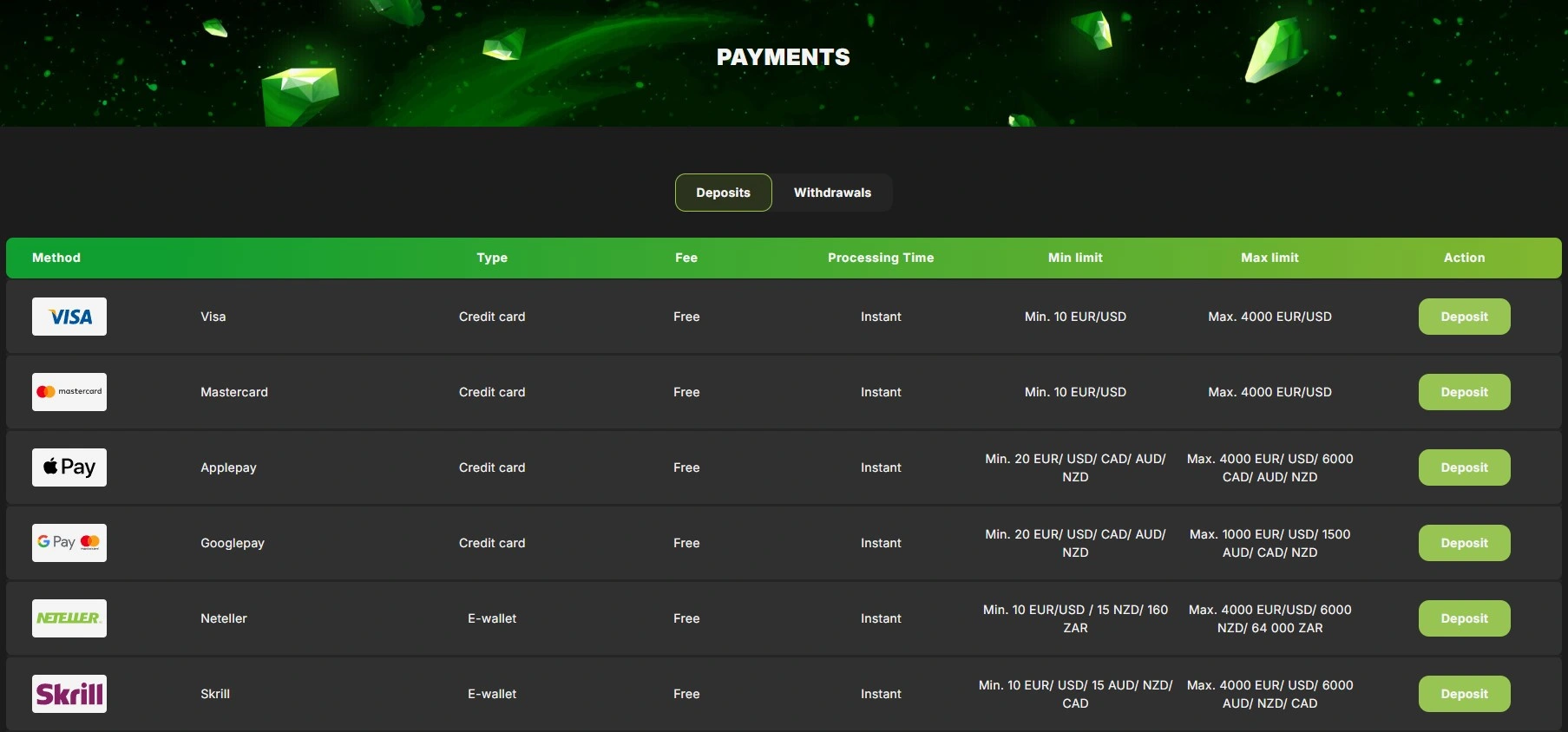
Fastpay supports an Australian-facing experience in AUD and a broad payment mix that includes major cards, e-wallets, prepaid or voucher-style methods and cryptocurrencies. Supported method families include Visa, Mastercard, Skrill, Neteller, Paysafecard, Neosurf, MiFinity and CashtoCode, while Fastpay also supports multiple cryptocurrencies. PayID is listed among the supported methods, but it should still be confirmed in the live cashier for the specific Australian account because cashier availability can vary. The useful question is therefore not just “does Fastpay have many methods?” but which rail fits your deposit, withdrawal and verification needs without relying on unsupported speed or fee claims.
This guide focuses on choosing a method. Exact withdrawal limits and processing details belong in the Fastpay withdrawals, while coin-level detail belongs in the Fastpay crypto payments.
The full picture is in our Fastpay Casino Australia review.
Fastpay payment methods at a glance
The main point is breadth rather than any single “fastest” option. Fastpay supports AUD on the Australian experience, so the core AUD and card payment view is already localised. The currently documented method set covers familiar card payment methods, e-wallets, voucher-style deposits and crypto. This matters because the best payment method depends on what you are trying to do.
| Method family | Examples documented for Fastpay | Typical use case | What to recheck in cashier |
|---|---|---|---|
| Cards | Visa, Mastercard | Simple fiat deposits for users who prefer card funding | Availability for your account, deposit limits and whether withdrawal back to card is offered |
| E-wallets | Skrill, Neteller, MiFinity | Separating casino funding from a primary bank card | Deposit and withdrawal support, limits and any account verification requirement |
| Vouchers and cash-code style methods | Paysafecard, Neosurf, CashtoCode | Controlled deposits without using a conventional card on the casino cashier | Whether the method is deposit-only and which withdrawal alternative is required |
| PayID | PayID | Australia-specific account-to-account payment option | Live availability for the specific account and direction of use |
| Crypto | BTC, ETH, LTC, BCH, USDT, USDC, DOGE, TRX, ADA, BNB | Wallet-based deposits and withdrawals | Supported networks, minimums, address format and current cashier coin list |
Processing times, withdrawal ceilings and fees can change and should be checked against the current cashier or banking terms before they are relied on. A method can still be evaluated without inventing them: look at currency, direction of use, whether you already have the required wallet or account, and whether the cashier presents the method to you.
Coins and the crypto reload are covered under Fastpay crypto.
AUD support is the foundation for Australian users
Fastpay’s AU experience supports AUD. That sounds basic, but it is one of the most practical banking facts because it determines how clearly deposits, balances and promotional values can be read. Using a native AUD balance avoids having to interpret a euro-denominated promotional cap or mentally convert a cashier amount before every transaction.
AUD support does not mean every payment method works in the same way. A card transaction, e-wallet transfer, voucher deposit and crypto transfer each have different mechanics. The currency setting is the account layer; the payment method is the transfer layer. Keeping those two ideas separate prevents a common mistake: assuming that because the casino account is in AUD, every external method is necessarily settled without conversion or third-party fees. Your bank, wallet or exchange can still apply its own rules.
Visa and Mastercard
Visa and Mastercard are included in the current Fastpay payment-method set. For many users, cards are the most familiar deposit route because they do not require setting up a separate e-wallet or crypto wallet. The decision point is convenience rather than an assumed speed advantage.
Before using a card, check the live cashier for whether it is enabled on your account, the permitted deposit range, and whether the same method is available for withdrawals. Do not assume that a method used to deposit is automatically the method used to cash out. Casinos and payment processors can route withdrawals differently because of verification, card capability or account rules.
Australia also has payment restrictions that apply to licensed interactive wagering services, but those jurisdiction-level rules should not be mechanically treated as proof of what a particular Fastpay cashier will accept or what a specific transaction means legally. Brand availability and Australian regulatory rules are separate questions. The Fastpay licence and trust handles the regulatory side.
Skrill, Neteller and MiFinity
Fastpay’s documented e-wallet set includes Skrill, Neteller and MiFinity. E-wallets can be useful when you prefer to place an intermediary between your bank account and a casino cashier. They can also simplify repeated transactions if you already use the same wallet elsewhere.
The practical checks are straightforward. First, confirm the wallet is available for deposits on your Fastpay account. Second, verify whether it is also available for withdrawals. Third, make sure the name and identity details on the wallet match your casino account where required. Fourth, check the wallet provider’s own fees and currency rules rather than assuming the casino controls all costs.
A wallet you already maintain is usually easier to evaluate than opening a new one solely for a casino promotion. If a bonus is linked to a particular deposit method, compare the value of the promotion with the extra setup or funding steps. The Fastpay bonuses page separates the offer headline from those payment-method decisions.
Paysafecard, Neosurf and CashtoCode
Paysafecard, Neosurf and CashtoCode sit in a different category from bank cards and e-wallets. They are useful when the deposit process is based on a prepaid balance, voucher or cash-code style mechanism rather than a standard card authorisation. For budget control, that can be attractive because the funding amount can be separated from a primary bank card.
The main limitation to check is withdrawal direction. Deposit-oriented methods are not always designed to receive casino withdrawals. If you deposit with a voucher, you may need a different withdrawal method later, which can trigger additional account or payment verification. The right question before depositing is therefore: “If I win and withdraw, which method will Fastpay require me to use?”
That is more useful than chasing an unsupported claim about instant deposits. Deposits often feel simple because money is moving toward the casino. Withdrawals are where identity checks, ownership verification and supported payout methods become more important.
PayID: relevant in Australia, but check the live cashier
PayID is a familiar Australian account-to-account payment method and is listed as a supported Fastpay method. It is especially relevant to Australian readers because it is built around identifiers linked to bank accounts rather than conventional card numbers. For a user who already uses PayID day to day, seeing it in a casino payment list can make the option immediately understandable.
Brand-specific availability still needs a live cashier check. PayID is a relevant option for Australian users, but it should not be assumed to appear on every Fastpay account, work in both deposit and withdrawal directions, or carry the same limits for everyone. The cashier view is the decisive operational check for the account being used.
There is also a regulatory context. ACMA has publicly discussed the use of PayID by illegal online gambling services and disruption work with financial institutions. That is an Australia-level enforcement signal about payment systems. That does not mean every PayID transaction has the same status, and it should not be converted into a blanket claim about an individual player’s conduct. Keep the regulator context separate from the narrower question of whether Fastpay displays PayID in a particular account.
Crypto payments
Fastpay supports multiple cryptocurrencies, with the current set including Bitcoin, Ethereum, Litecoin, Bitcoin Cash, Tether, USD Coin, Dogecoin, TRON, Cardano and BNB. That makes crypto a real part of the cashier mix rather than a token mention. It also connects to the brand’s advertised crypto reload promotion.
Crypto requires more operational care than a card or e-wallet. You need the correct coin, the correct network where network choice is presented, a valid destination address, and a clear understanding of whether the amount you are sending matches the casino’s minimum. A transfer to the wrong network or address can be difficult or impossible to reverse. These are wallet mechanics, not bonus details.
Do not assume a coin list is permanent. Cashiers add and remove assets, and stablecoin network support can change even when the coin name remains the same. Confirm the exact live coin and network before transferring. For a deeper method-by-method breakdown, use the Fastpay crypto payments guide.
Deposits and withdrawals are different decisions
A strong payment guide should not flatten every logo into one list. Depositing and withdrawing have different requirements. A deposit method needs to move funds into the account. A withdrawal method also has to satisfy ownership, identity and payout rules. That is why a method can be easy to use for deposits yet unavailable or inconvenient for withdrawals.
- For deposits
- Check availability, currency, minimum and maximum amount, payment-provider fees, bonus eligibility and whether the account name matches.
- For withdrawals
- Check which payout methods are available, whether Fastpay requires a return to the original method where possible, whether KYC is complete, and the current official limits or fees.
Exact withdrawal limits, processing times and fees can change and should be confirmed from current official terms or the live cashier. The Fastpay withdrawal guide explains how to assess those details before requesting a withdrawal.
How to choose the right Fastpay payment method
Start with what you already use rather than with the longest payment list. A simple decision sequence is more reliable:
- Choose your account currency: for the Australian-facing experience, AUD is supported.
- Decide whether you want fiat or crypto: do not choose crypto only because a reload promotion exists.
- Check the live cashier: account-level availability overrides a generic method list.
- Check both directions: know how you would withdraw before making the deposit.
- Complete verification early: payment ownership and KYC questions are easier to solve before a large withdrawal request.
- Review third-party costs: banks, wallets and exchanges can have their own fees or conversion rules.
- Keep a transaction record: save deposit references and wallet transaction IDs where relevant.
If two methods are equally convenient, the better choice is usually the one that creates fewer extra accounts, conversions or withdrawal complications. Familiarity and reversibility often matter more than a marketing claim about speed.
Payment methods and bonuses
Fastpay’s promotions include deposit bonuses and a crypto reload, so banking choices can overlap with promotional eligibility. The order of decision making matters. Choose a method you are comfortable using, then check whether the promotion accepts it. Do not choose an unfamiliar payment method simply because a bonus is attached.
The Fastpay bonuses guide covers the current AU offer amounts and the terms to check. Choose a payment method first, then check whether a promotion accepts it; this keeps the banking decision tied to practical use rather than the size of a bonus headline.
Australian regulatory context
Australian payment regulation and illegal-gambling enforcement can affect how readers interpret certain payment methods, particularly PayID and card payments. ACMA warns that illegal online gambling services can target Australians even when they do not provide the customer protections of licensed services. That broader context is important, but it does not replace the live Fastpay cashier.
For payment decisions, use two layers of information: first, what Fastpay actually offers in the live cashier; second, what Australian regulators say about the legal and consumer-protection context. Do not infer one from the other. A payment logo does not establish licensing, and a regulatory rule aimed at licensed wagering does not automatically describe every cashier transaction at an offshore casino.
The dedicated Fastpay ACMA and licence record page handles those legal and trust questions in more detail.
How banking connects with bonuses and withdrawals
Payment choice is only one part of assessing the brand. The Fastpay Australia review connects banking with the current offer set, game access, account experience and the separate trust analysis.
Choosing a Fastpay payment method
Fastpay’s Australian payment setup is broad enough to give users several distinct routes: AUD account support, Visa and Mastercard, Skrill and Neteller, MiFinity, Paysafecard, Neosurf, CashtoCode, PayID and a substantial crypto list. The strength of that mix is choice, not a guaranteed processing time.
For Australian users, PayID is the method most worth rechecking directly because it is locally familiar, yet live availability can vary by account. For every method, confirm deposit and withdrawal direction before sending funds. Use the cashier for operational availability, the withdrawal guide for current withdrawal terms, and the trust guide for Australian regulatory context.
Fastpay Payment Methods Australia - AUD, PayID, Cards, E-Wallets and Crypto
Content created by the «fastpaycasinohubau.com» team